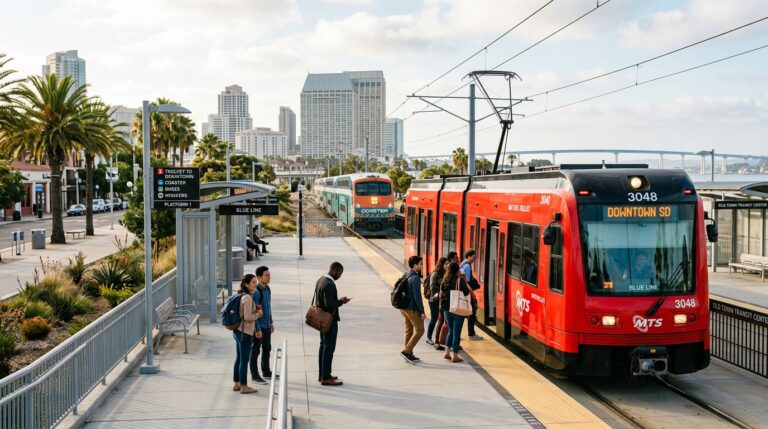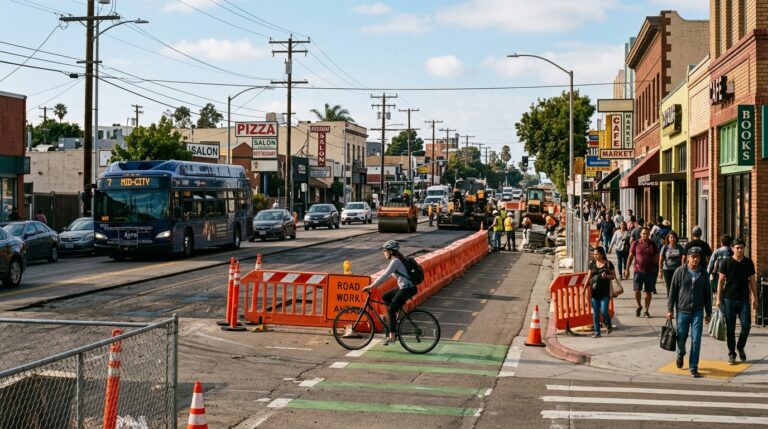
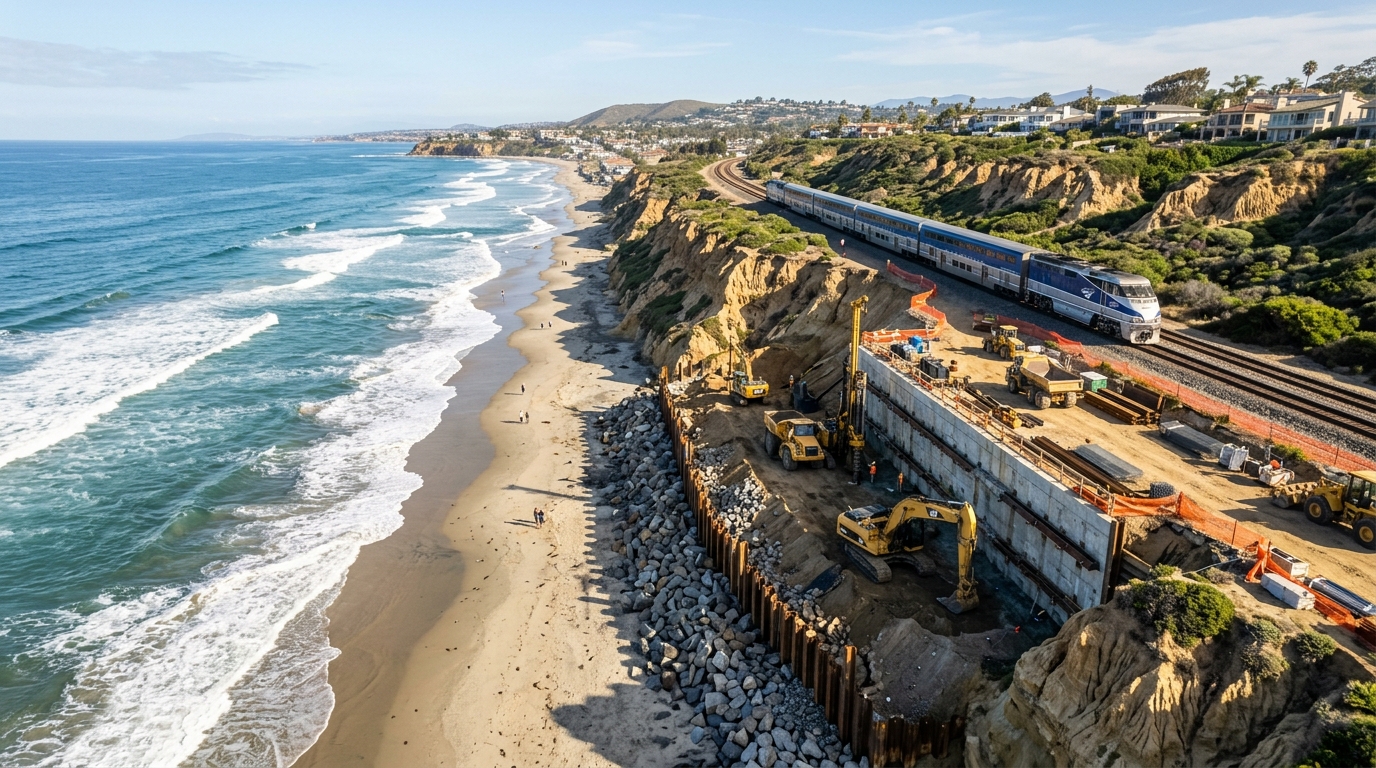
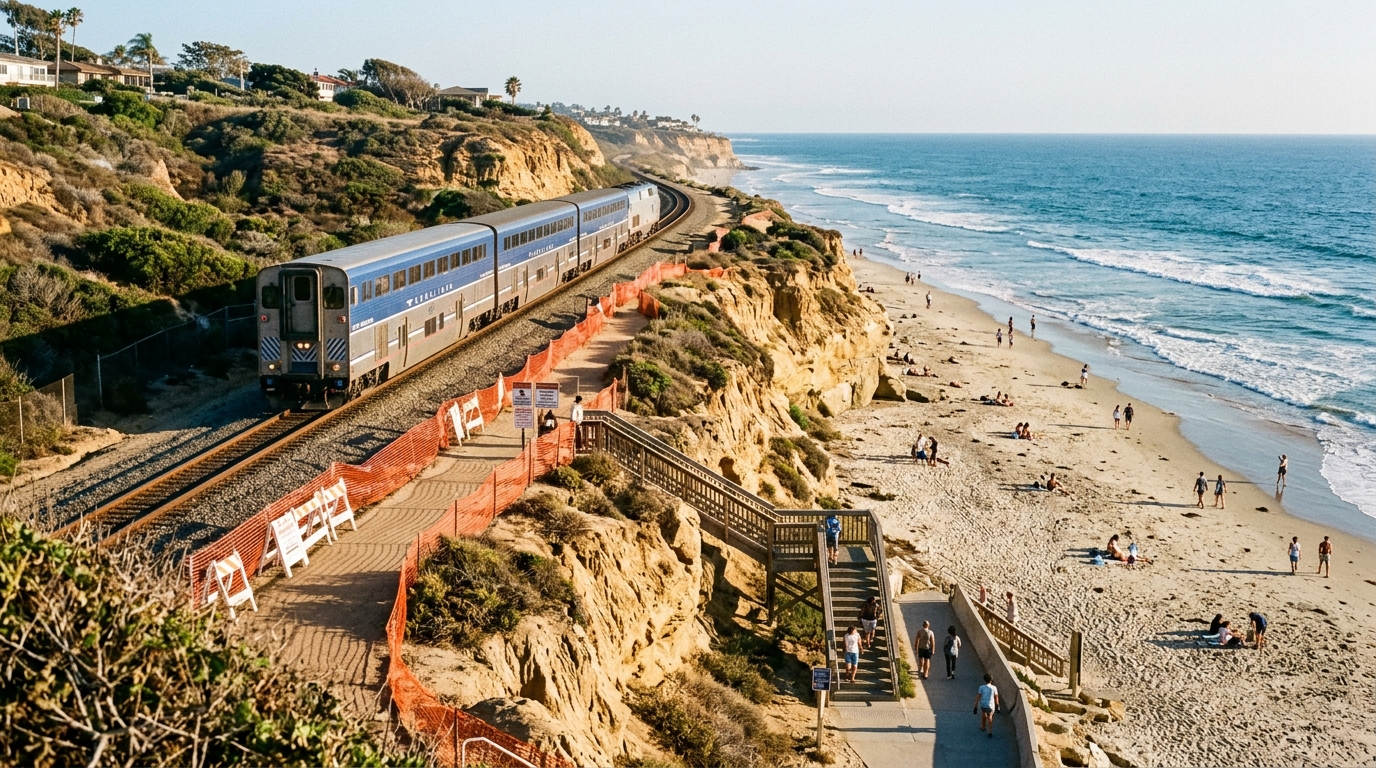
The railroad running along the Del Mar bluffs offers one of the most recognizable coastal views in San Diego County, but it also occupies a narrow and vulnerable strip of land above the beach. Erosion, storms, seismic activity, drainage problems, and gradual bluff retreat have made continued stabilization necessary while regional agencies study a longer-term location for the rail line.
Phase 5 of the Del Mar Bluffs Stabilization project is currently under construction. SANDAG began this phase in spring 2024 and expects work to continue through 2027. The project covers approximately 1.7 miles, extending from 15th Street in Del Mar to the railroad bridge near North Torrey Pines Road.
For visitors, the project does not mean that Del Mar is closed. Beaches, parks, businesses, and rail services generally remain available, but construction can create temporary access changes, noise, work zones, nighttime activity, and periodic train-service adjustments. This guide explains what is being built, how to plan a coastal visit, and why the stabilization work should not be confused with the proposed long-term rail realignment.
Use our Del Mar community guide, Getting Around guide, and Local Projects hub to connect this update with nearby attractions, transportation options, and other county infrastructure projects.
Why the Del Mar Bluffs Project Matters
The tracks through Del Mar form part of the Los Angeles–San Diego–San Luis Obispo, or LOSSAN, rail corridor. Passenger trains, commuter service, and freight trains use this route to connect San Diego County with destinations farther north. Because the track sits close to an eroding coastal edge, damage or instability in one short section can affect travel far beyond Del Mar.
Four earlier stabilization phases added support columns, drainage systems, retaining structures, and repairs at vulnerable locations. Phase 5 continues that work with additional structural support and erosion-control measures intended to keep the existing rail alignment usable while environmental planning proceeds for a longer-term solution.
Phase 5 Is a Short-Term Stabilization Project
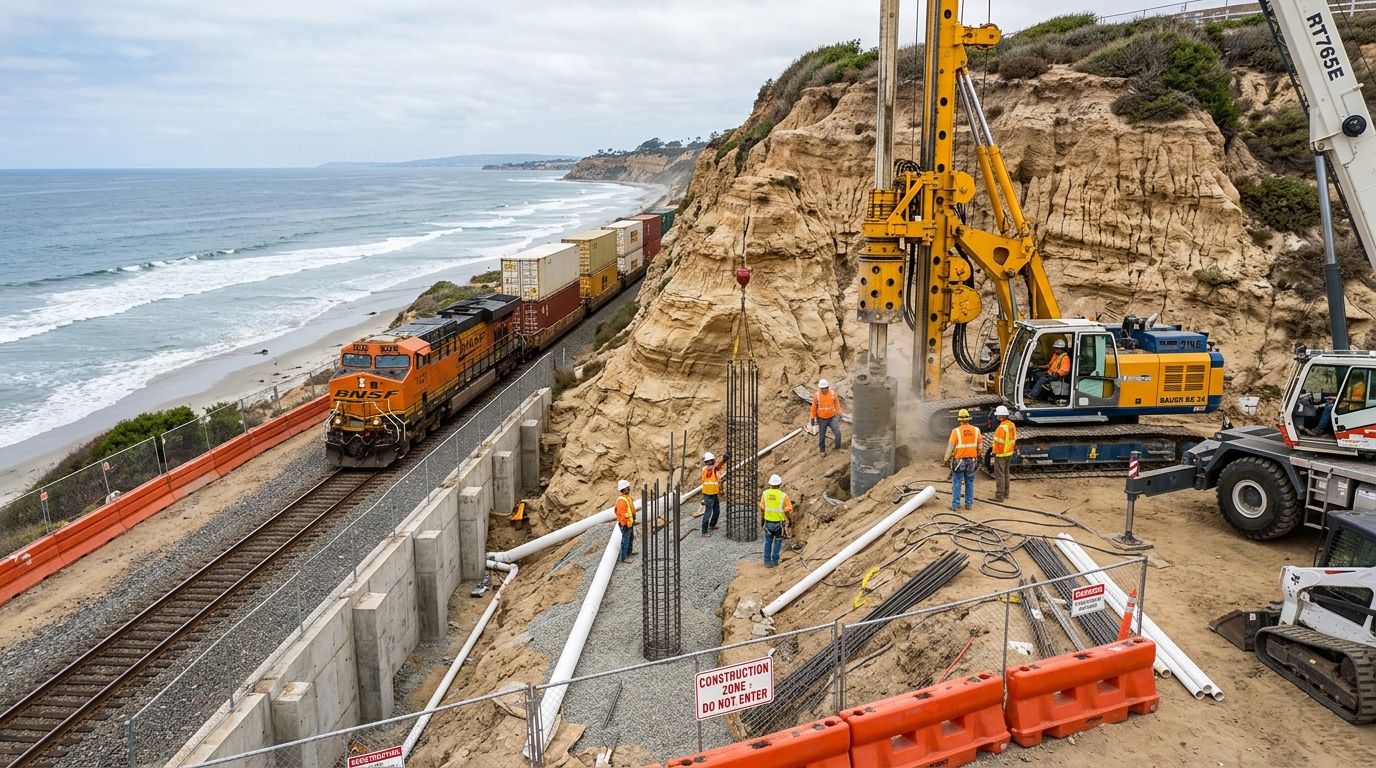
SANDAG describes Phase 5 as a short-term project designed to protect the bluffs and railroad for roughly the next 30 years. That estimate should not be interpreted as a guarantee that no additional maintenance will be required. Coastal conditions continue to change, and agencies may need to inspect, repair, or supplement individual areas over time.
The approximately $88 million project is funded through a combination of local, state, and federal sources. Its purpose is to improve safety and reliability, not to create a second track or permanently settle the debate over where the rail corridor should eventually be located.
What Crews Are Installing
Current work includes additional support columns, seawall extensions, retaining walls, drainage improvements, and erosion-control measures. Support columns reinforce areas beneath or near the track, while drainage work helps prevent uncontrolled stormwater from saturating and weakening bluff material.
Seawalls are being extended in selected areas to reduce damage from high tides and wave action. Retaining structures and other stabilization features provide additional reinforcement where engineers have identified vulnerable conditions. After construction is finished, disturbed work areas are expected to be replanted with California native species.
Where and When Work Is Happening
The official project area runs along the bluffs from 15th Street south to the North Torrey Pines Road bridge. Regular construction generally takes place on weekdays during normal business hours, but some operations occur at night or on weekends because trains use the corridor during the day.
Nighttime work can involve drilling, excavation, wall construction, concrete placement, and drainage improvements. Nearby residents and hotel guests may notice bright work lights, equipment noise, and required backup alarms. These impacts are usually temporary at each location because crews move along the bluff as different tasks are completed.
Weather, high tides, nesting seasons, rail operations, and site conditions can change the schedule. Travelers should check current notices rather than relying on an older photograph or update.
The Rail Line Still Operates During a Multi-Year Construction Window
Normal rail operations continue through the construction period, but the project sometimes requires special work windows when trains cannot safely pass active construction. SANDAG refers to full closures between Oceanside and San Diego as Absolute Work Windows. During those windows, affected COASTER and Amtrak Pacific Surfliner services may be suspended, shortened, or replaced by buses.
Pacific Surfliner also warns that Del Mar construction may produce periodic schedule changes affecting service to and from Santa Fe Depot and Old Town San Diego, particularly during selected Sunday-night through Tuesday-morning work periods. Planned dates are added as schedules are finalized, so a traveler should never assume that an older timetable remains accurate.
What Train Riders and Coastal Visitors May Notice
Train passengers should check their operator’s service-alert page before departure, especially for weekend travel, early-morning trains, and late-evening trips. Confirm whether the train will serve Downtown San Diego, originate or terminate at Solana Beach, or use a connecting bus. Allow additional transfer time when replacement transportation is announced.
Beach visitors may still use legal public access points, but they should stay outside fenced or marked construction zones. Walking beside or across the tracks outside a legal crossing is dangerous and can interfere with active passenger and freight operations. When work occurs near the beach, flaggers or temporary signs may direct visitors around equipment.
Temporary fencing, equipment access, and drainage work may change blufftop walking routes. Do not move barriers or use an informal trail simply because it appears shorter.
Visitors arriving by car should expect normal coastal parking pressure in addition to possible construction activity. Plan a legal parking location before walking toward the bluffs, leave driveways clear, and avoid stopping where construction vehicles need access. Our Where to Stay guide can help overnight visitors choose a practical base, while the Beaches and Coastal Access directory will organize verified public entry points as listings are added.
How the Short-Term Work Relates to Rail Realignment
The Phase 5 stabilization project and the LOSSAN Rail Realignment project are related, but they are not the same project. Phase 5 reinforces the existing bluff alignment. Rail realignment is the longer-term planning effort examining whether and how the tracks could be moved away from the eroding coastal edge.
Public discussion sometimes treats a tunnel, inland route, bluff reinforcement, and current construction as though one final option has already been selected. It has not.
A Long-Term Route Is Still in Environmental Planning
SANDAG is analyzing four alternatives, including options with tunnel sections and a reinforced double-track concept that would retain the rail line on the bluffs. A no-project alternative must also be studied under environmental-review requirements. Three of the proposed build alternatives include tunnels because the terrain and maximum rail-grade requirements make a fully surface-level route difficult.
Geotechnical work began in 2025, and engineering surveys, noise measurements, and other technical studies continued in 2026. An updated Notice of Preparation for a Draft Environmental Impact Report was released in 2025, but no final alignment has been chosen. Draft environmental documents must still be prepared, circulated, reviewed, and followed by later decisions, design work, funding, permits, and construction planning.
Travelers should therefore avoid repeating claims that a specific tunnel is approved or about to open. The honest current description is that stabilization is under construction while realignment remains in environmental analysis.
What Travelers Should Do Before Visiting
Begin with the purpose of the trip. Beach visitors should review legal access points and current construction notices. Rail passengers should check COASTER or Pacific Surfliner alerts on the day of travel. People planning a blufftop walk should be prepared for temporary path changes and should remain behind barriers.
Bring appropriate sun protection and footwear because an unexpected detour can increase walking distance. Keep children close near tracks, bluffs, streets, and work areas. Never stand on the rail right-of-way for photographs, and do not assume a quiet track is inactive.
Combine the visit with places that do not depend on one particular bluff access point. Del Mar’s village streets, parks, beach areas, nearby communities, and dining options can still support a full day even when construction affects a preferred route. Explore our North County Coastal guide, Things to Do hub, and North County Coast Weekend itinerary for alternatives.
Most importantly, distinguish current conditions from long-term concepts. Phase 5 is an active stabilization project scheduled through 2027. It is intended to extend the useful life of the present rail alignment while agencies evaluate a permanent solution. Rail realignment remains under environmental review, and no final route has been selected.
For current maps, construction notices, work hours, and project status, consult the official SANDAG Del Mar Bluffs Stabilization page. Train passengers should also review the current Pacific Surfliner Del Mar travel advisory before departure.