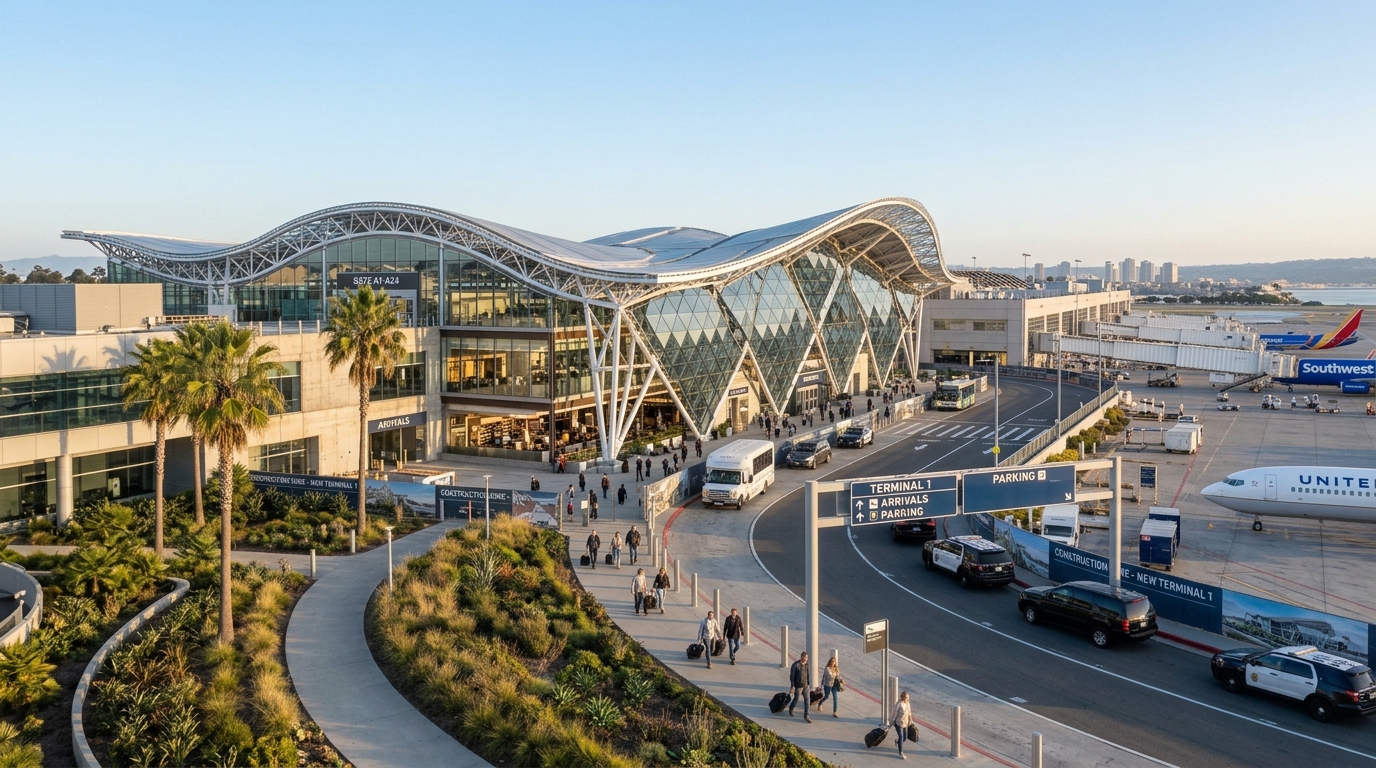
San Diego International Airport has entered a new era. The original Terminal 1, long known for tight waiting areas and an aging layout, has been replaced in stages by a larger terminal designed around modern security, local dining, public art, easier parking, and a stronger sense of San Diego. The first major portion of the New Terminal 1 is operating, while the airport continues construction on the remaining phase.
That combination—an open terminal beside an active construction program—means travelers should expect a much better experience than before, but they should still verify their airline, terminal, parking plan, and ground transportation before leaving home. This guide explains what has changed, what is still being built, and how to plan a smoother airport day in 2026.
For more countywide transportation information, use our San Diego airport guide, Getting Around guide, and broader travel-planning resources.
What Changed at SAN’s New Terminal 1?
The New Terminal 1 is not simply a cosmetic renovation. It is a multiyear replacement project intended to expand gate capacity, improve passenger circulation, modernize security and baggage systems, and create a terminal that better reflects the region. San Diego International Airport opened the first major phase in September 2025, replacing facilities that dated to the 1960s.
The airport describes the complete New Terminal 1 program as a 30-gate terminal. Its published opening plan divided the work into phases: the initial operating section opened first, additional gates were scheduled to follow, and the remaining Phase 1B work continues toward full completion in 2028. Because construction schedules can change, readers should treat the airport’s official project page as the source of truth rather than relying on old news articles or social media posts.
The First Phase Is Open While Phase 1B Continues
What Is Open Now?
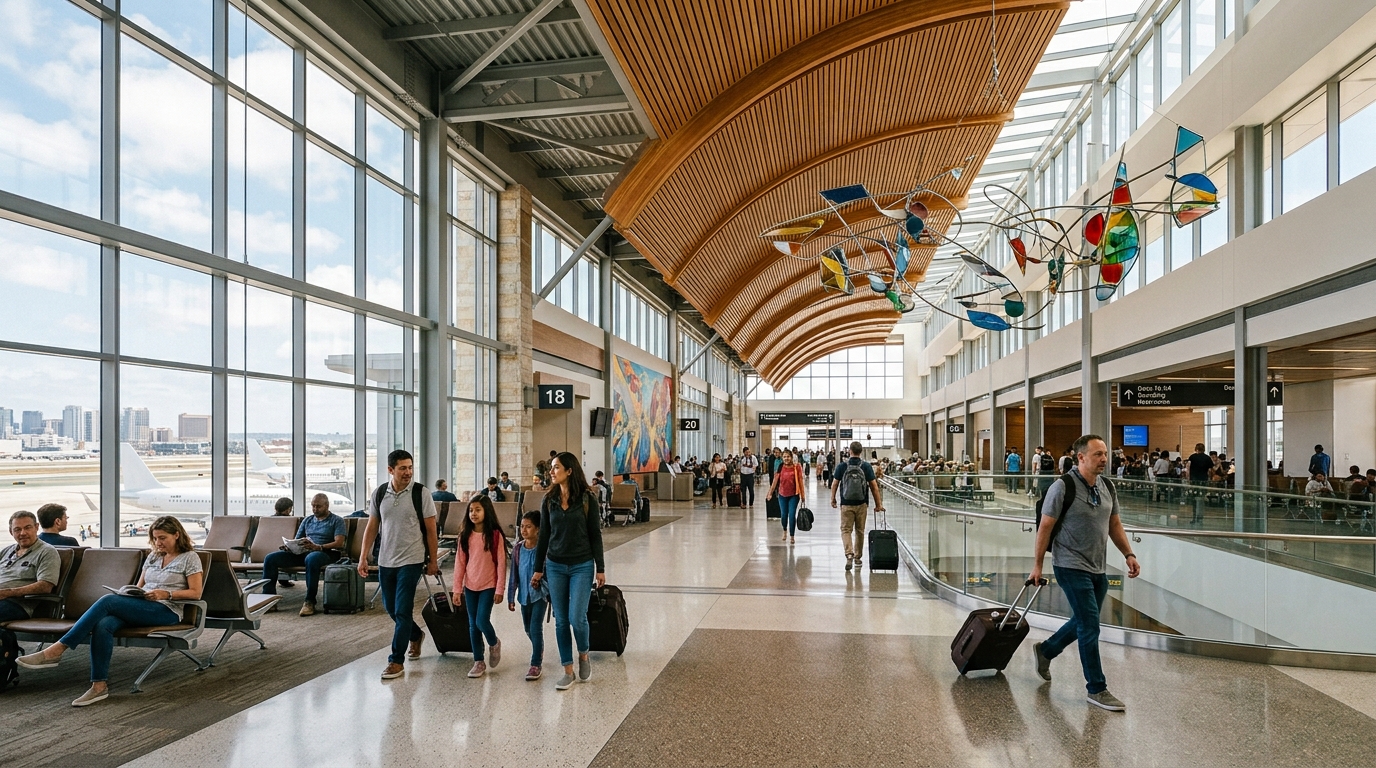
Travelers using Terminal 1 now enter a substantially different building. The open portion introduced larger public areas, expanded security capacity, updated baggage systems, new concessions, commissioned artwork, and architecture inspired by the county’s canyons, sea, and sky. In June 2026, the terminal was recognized by Prix Versailles for architectural excellence, giving the project international attention beyond its practical airport role.
The new building also works with the Terminal 1 Parking Plaza directly across from the terminal. That proximity can make the walk from parking to ticketing more straightforward than the old surface-lot experience. Travelers should still note their parking level, core color, and elevator location because a large garage can be confusing after a long return flight.
Do not assume every airline operates from Terminal 1. Airline assignments remain divided between Terminal 1 and Terminal 2 and can change. Check the airline’s app and the airport’s current airline and terminal directory on the day of travel.
What Remains Under Construction?
Phase 1B remains an active construction project. The Airport Authority reported in July 2026 that the phase was on schedule after a June topping-out milestone. When complete, it is expected to add the remaining gates and additional passenger amenities, including more concession space and lounges.
Construction can affect road access, terminal connections, pickup patterns, signs, and walking routes. Temporary conditions may be different from what a traveler remembers from a previous trip. Follow posted signs instead of relying entirely on a mapping app, especially near terminal entrances and the roadways connecting Terminal 1 and Terminal 2.
The key distinction is simple: the New Terminal 1 is already an operating airport terminal, but the full project is not finished. It should not be described as merely proposed, and Phase 1B should not be described as completed. Readers interested in other major regional investments can also visit our San Diego County Local Projects section.
The Passenger Experience Is More Local and Practical
The most noticeable improvement is the amount of breathing room. Wider circulation areas and a modernized checkpoint layout are designed to reduce the compressed feeling associated with the former terminal. The project also places more emphasis on natural light, views, local art, and regionally inspired food and retail.
That does not eliminate normal airport pressure. Security waits still vary with departure banks, holidays, weather, staffing, and special events. A beautiful terminal is not a reason to arrive late. Use the departure time recommended by your airline, allow extra time when checking bags, and add a buffer during summer, holiday weekends, and major convention periods.
The terminal’s local identity may encourage travelers to spend more time after security, but dining hours can differ by concession and gate area. Travelers with dietary requirements, young children, or late-night departures should not assume every restaurant will be open. Carry an acceptable snack, refill a water bottle after screening, and confirm available services through the airport before traveling.
Accessibility planning also deserves attention. The airport publishes information on accessible parking, terminal access, service-animal relief areas, and passenger services. Travelers who require airline assistance should arrange it directly with their carrier before arrival. Our site’s Accessible Travel guide will connect airport planning with accessible attractions, lodging areas, and transportation across the county.
How to Plan a Smoother Airport Day in 2026
The best airport plan begins before the drive. San Diego International Airport is close to Downtown, but its single-runway waterfront setting concentrates vehicles, construction activity, rideshares, buses, taxis, shuttles, and private pickups into a limited area. A short geographic distance does not always mean a short curbside trip.
Build Your Trip Around the Correct Terminal
Parking, Pickup, and Public Transportation
Drivers should choose parking based on the actual departure terminal, trip length, and current availability. The Terminal 1 and Terminal 2 parking plazas are positioned across from their respective terminals, while the airport also publishes information about reservations, valet service, and a free cell phone waiting lot. Rates and promotions change, so confirm the current price before booking rather than copying an amount from an older guide.
For passenger pickup, use the designated waiting and pickup areas and avoid circling before the arriving traveler is ready. Ask the traveler to confirm the terminal, baggage-claim area, and pickup zone after landing. “I am outside” is not enough information at a busy airport.
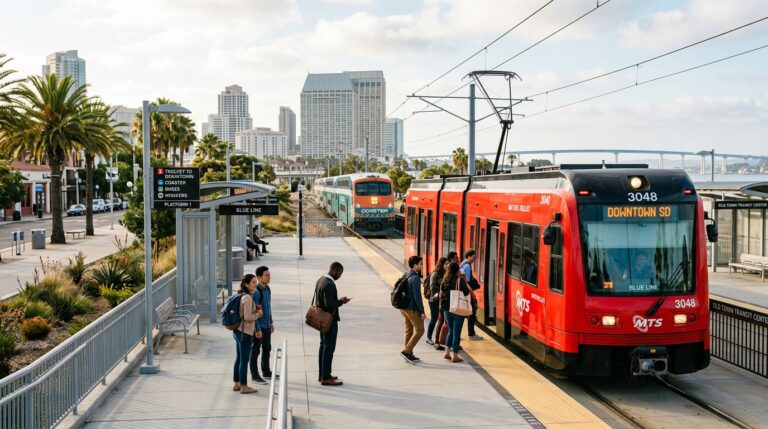
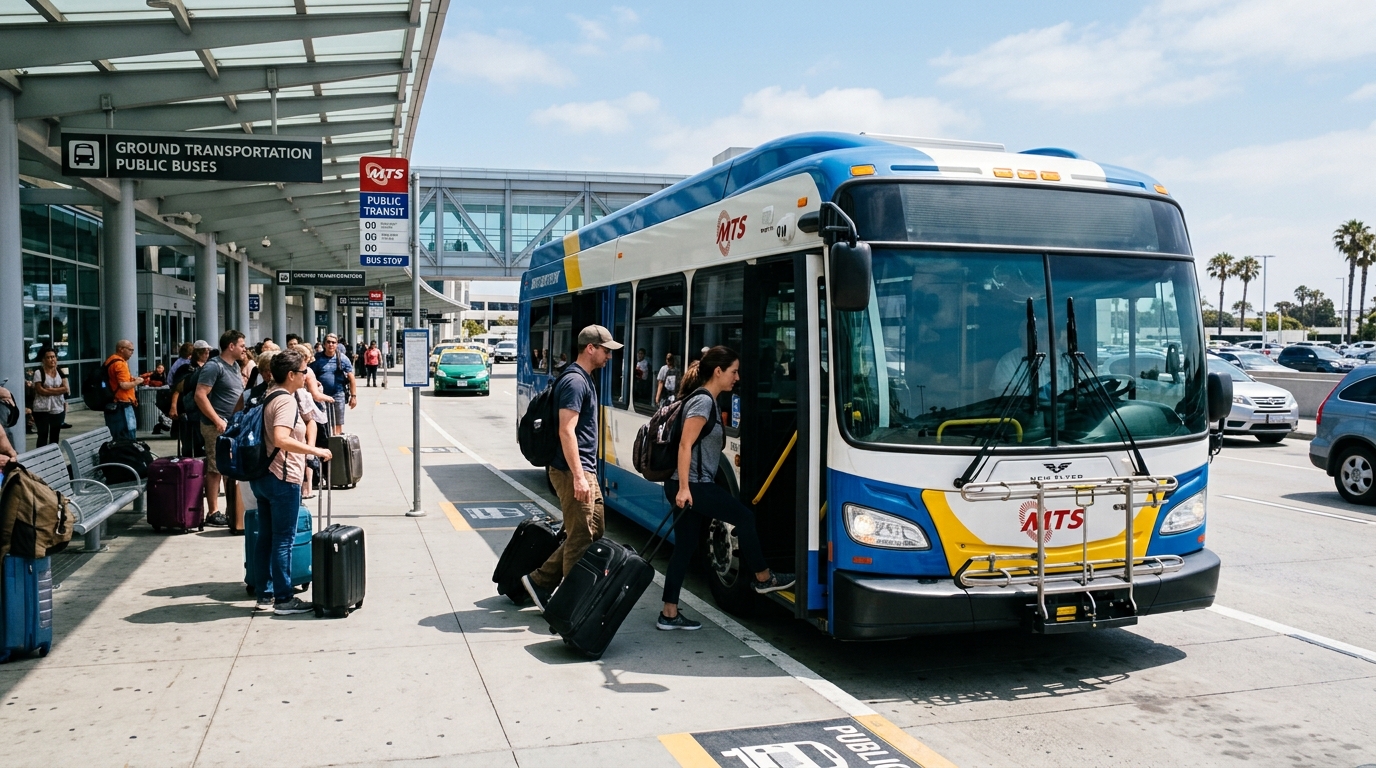
Public transportation can be practical for travelers staying Downtown or connecting through central transit stations. MTS Route 992 links both airport terminals with Downtown and connections near Santa Fe Depot and America Plaza. MTS currently describes the trip to or from Santa Fe Depot as roughly 15 minutes under normal conditions, with frequent service during much of the day. Check the current timetable before depending on the bus for an early flight or late arrival. Our future Car-Free San Diego County guide will explain how airport service connects with the Trolley, COASTER, Amtrak, and walkable visitor districts.
Rideshare and taxi pickup locations are controlled by airport signage and may shift during construction. Open the transportation app only after checking the posted pickup zone. Hotel shuttles and private operators may use different areas, so confirm the exact meeting point with the provider.
Final Checklist Before You Leave
Start by checking your airline’s app for the current terminal, gate, departure time, and baggage rules. Then review the airport website for construction notices, parking conditions, roadway changes, and service updates. If you are driving, reserve parking when appropriate and save the reservation details. If someone is dropping you off, send the terminal and airline name before the trip begins.
Travelers connecting an airport stay with a county itinerary should also think about location. Downtown, the waterfront, Old Town, Point Loma, Mission Valley, and coastal communities offer different tradeoffs in travel time and transportation. Use our Where to Stay guide to choose a practical base rather than selecting a hotel only by distance on a map.
Finally, build in margin. San Diego’s airport is centrally located, but traffic incidents, construction, crowded security lines, and event travel can quickly consume a narrow schedule. Arriving early enough to navigate the terminal calmly is more valuable than trying to calculate the absolute latest possible departure from your hotel or home.
The New Terminal 1 is already a major improvement and an important new gateway to San Diego County. Its first operating phase delivers a more spacious, locally grounded passenger experience, while Phase 1B continues toward the complete 30-gate vision. The practical takeaway for 2026 is not complicated: verify the terminal, check current construction information, choose transportation before departure day, and rely on official airport and transit sources for changing details.
For verified transportation listings, shuttle information, and visitor services as the directory grows, browse our Transportation and Visitor Services directory. For live airport information, consult the official San Diego International Airport website.