San Diego County is often described as a driving destination, and that description is partly accurate. The county covers a large area that includes coastal cities, dense urban neighborhoods, inland communities, mountains, rural areas, and desert landscapes. Some destinations remain difficult or impractical to reach without a private vehicle.
That does not mean every San Diego County trip requires a rental car. Travelers can use a combination of the San Diego Trolley, MTS buses, Rapid routes, the COASTER commuter train, SPRINTER rail, North County buses, ferries, walking, and occasional rideshare trips to build a practical car-free itinerary.
The key is choosing destinations around transit instead of selecting distant attractions first and trying to force public transportation to connect them. Downtown San Diego, Barrio Logan, Old Town, Little Italy, Mission Valley, UC San Diego, La Jolla-area transit stops, South Bay, Oceanside, Carlsbad, Encinitas, Solana Beach, Vista, San Marcos, Escondido, and Coronado can all form part of a transit-oriented visit.
This guide explains how the regional systems connect, how to pay, and which kinds of trips work best without a car. It also links to our Getting Around guide, Car-Free Travel hub, and Weekend Itineraries.
Understanding San Diego County’s Transit Network
San Diego County does not have one single transit operator covering every destination. Metropolitan Transit System, commonly called MTS, serves much of central, southern, and eastern San Diego County. North County Transit District, or NCTD, operates rail and bus services across North County.
The regional PRONTO payment system works across many MTS and NCTD services. Riders can use a physical PRONTO card or the mobile app, and MTS also accepts supported contactless credit and debit cards on many services. Travelers must tap or scan before each trip, including transfers.
For standard MTS buses, Rapid routes, and the Trolley, the current regular adult fare is $2.50. PRONTO provides a two-hour transfer window and fare capping, which means a regular adult rider using eligible services will not pay more than the current $6 standard day-pass value in one day. COASTER fares work differently and are based on the number of zones traveled, so they should be purchased specifically for the planned trip.
Use MTS for the Airport, Downtown, South Bay, and East County
Getting From the Airport to Downtown
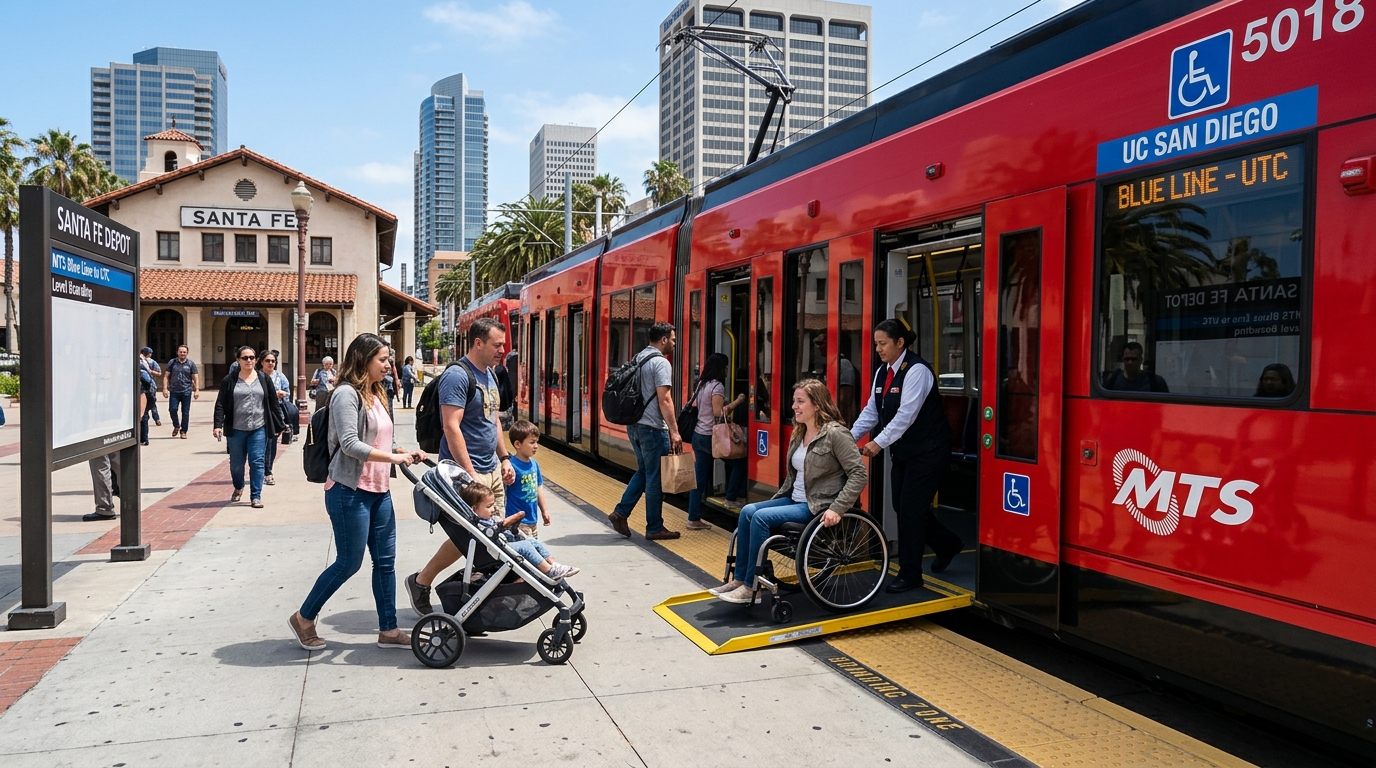
MTS Route 992 connects both terminals at San Diego International Airport with Downtown San Diego. The route serves stops near Santa Fe Depot, America Plaza, the waterfront, and central Downtown streets. Santa Fe Depot provides connections with the Trolley, COASTER, Amtrak, and several bus routes.
MTS describes the Route 992 journey between the airport and Santa Fe Depot as approximately 15 minutes under normal conditions. Actual travel time can be longer during traffic, construction, major events, or periods of heavy airport activity.
Service operates frequently during much of the day, but travelers with very early departures or late arrivals should check the current timetable rather than assuming a bus will be available. The June 2026 schedule introduced earlier Downtown departures, improving access for some morning flights.
Travelers staying Downtown may not need a rental car at all. Hotels around Little Italy, the waterfront, Gaslamp Quarter, East Village, and Cortez Hill can provide access to transit, restaurants, cultural destinations, and the bay. Read our San Diego Airport New Terminal 1 guide before flying because airport roadways and construction conditions may continue to change.
Using the Trolley and MTS Bus Network
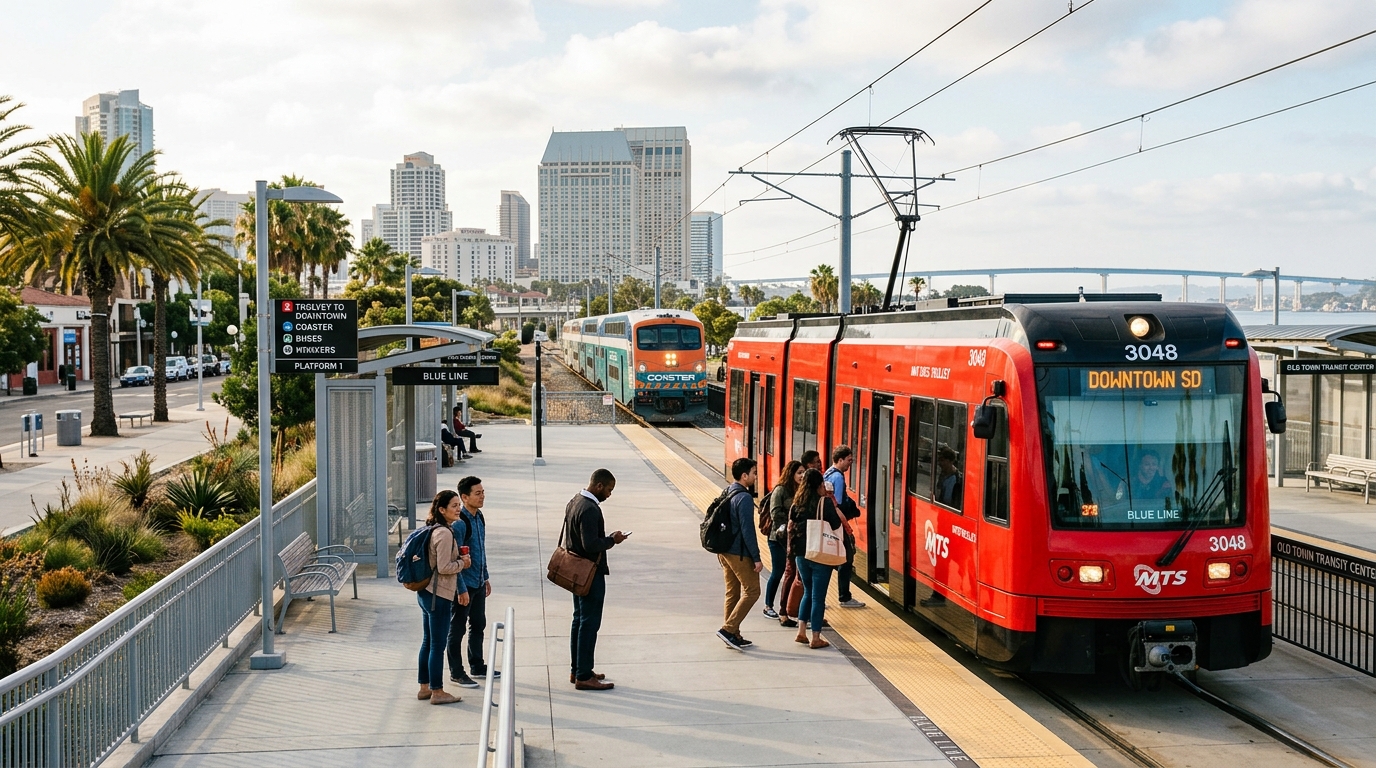
The San Diego Trolley currently includes the UC San Diego Blue Line, Green Line, Orange Line, and Copper Line. Together, they connect Downtown with South Bay, the international border, Mission Valley, East County, UC San Diego, UTC, and numerous transfer stations.
The Blue Line is especially useful for car-free visitors. It connects San Ysidro and South Bay with Downtown, Old Town, UC San Diego, and UTC. Travelers can use it for destinations near Barrio Logan, central San Diego, Old Town, and northern urban communities, although some attractions still require a connecting bus or a significant walk.
The Green Line connects Downtown and 12th & Imperial with Mission Valley, SDSU, and East County. It can support visits to Old Town, Fashion Valley, Mission Valley hotels, Snapdragon Stadium events, and communities farther east.
The Orange Line links Downtown with Barrio Logan, Lemon Grove, La Mesa, and El Cajon. The Copper Line operates in East County and helps organize transfers around El Cajon Transit Center and nearby stations.
Do not judge a destination only by the nearest station name. Some beaches, museums, neighborhoods, and attractions require a bus connection after leaving the Trolley. Use the official MTS trip planner and examine the final walking route before starting the trip.
MTS buses and Trolleys include accessibility features such as ramps or lifts for riders using wheelchairs, scooters, walkers, crutches, or other mobility aids. Accessible does not always mean effortless, however. Sidewalk conditions, station elevators, construction detours, and the distance between a stop and the final destination can affect the complete journey. Our Accessible Travel guide provides additional planning considerations.
Use NCTD for North County Coastal and Inland Trips
COASTER and SPRINTER Serve Different Travel Corridors
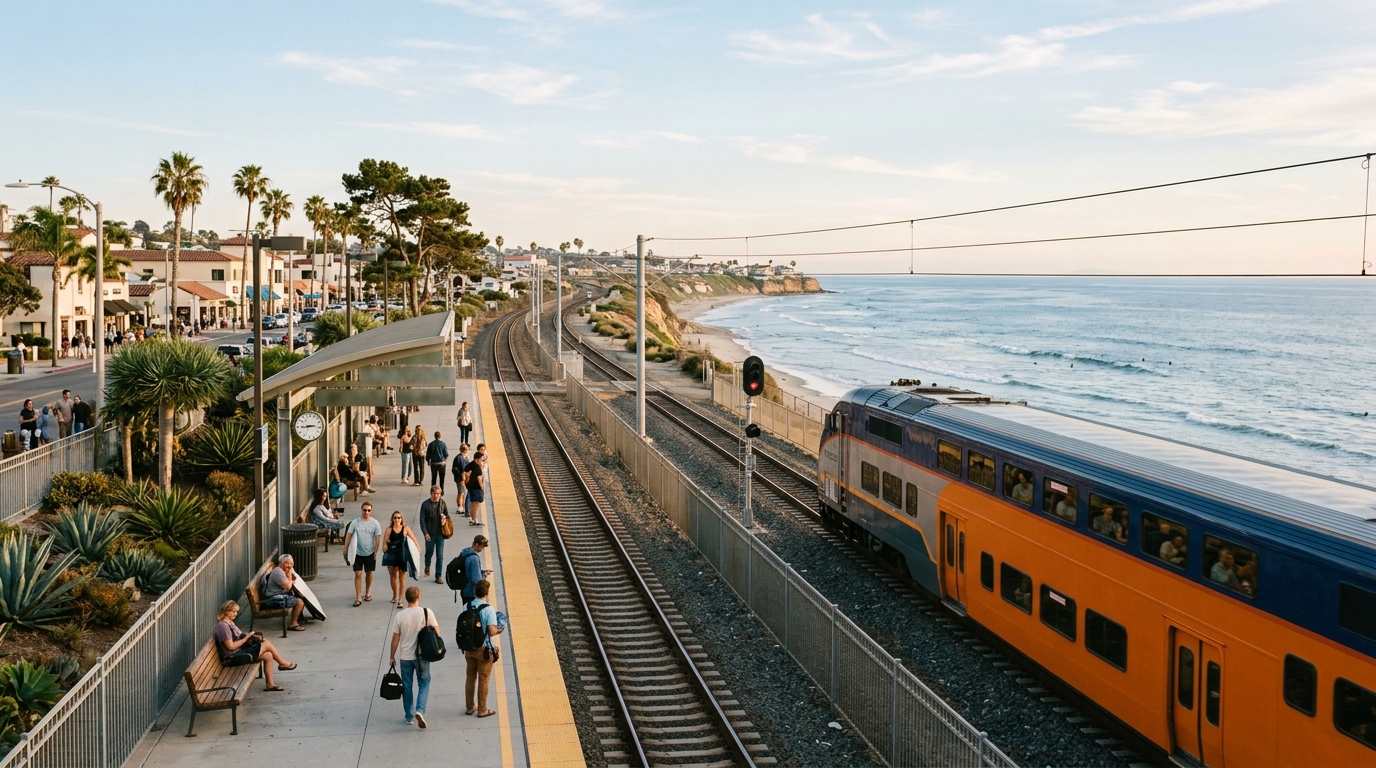
The COASTER is the primary rail option for car-free travel between Downtown San Diego and coastal North County. It serves eight stations between Santa Fe Depot and Oceanside, including Old Town, Sorrento Valley, Solana Beach, Encinitas, Carlsbad, and Oceanside.
This makes the train useful for a coastal town-hopping day, but the station is not always beside the beach or town center. Solana Beach, Encinitas, Carlsbad Village, and Oceanside are among the more practical stops for walking, local buses, or short rideshare connections.
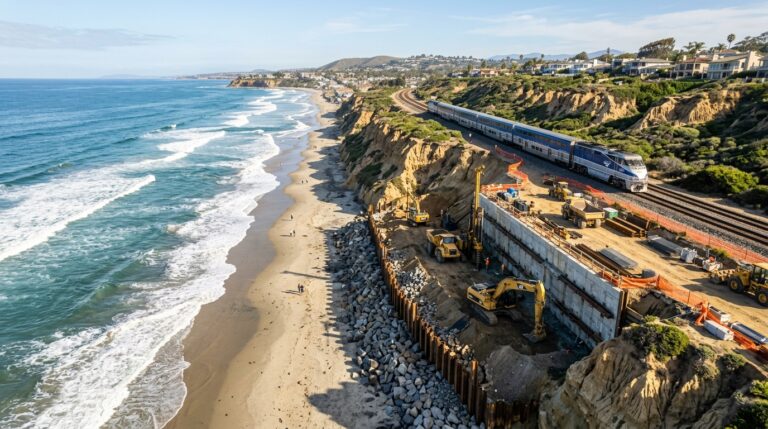
COASTER schedules are less frequent than urban Trolley service, particularly outside weekday commuting periods. Missing a return train can create a long delay, so choose the return trip before beginning the day. Check service alerts as well, because construction along the LOSSAN rail corridor can cause closures or schedule adjustments. Our Del Mar Bluffs rail project guide explains one continuing source of coastal rail work.
The SPRINTER serves a different purpose. Its 22-mile east-west route links Oceanside with Vista, San Marcos, and Escondido through 15 stations along the State Route 78 corridor. It generally operates every 30 minutes during its more frequent service periods, with reduced frequency at some early, late, weekend, or holiday times.
A useful North County itinerary could begin with the COASTER from Downtown to Oceanside, continue east on the SPRINTER, and return through the same connection. That does not mean every attraction near Escondido or San Marcos is walkable from a station. Always check the local bus or rideshare connection before committing to the trip.
NCTD’s BREEZE buses fill many of those local gaps. The agency also provides real-time arrival information for BREEZE, SPRINTER, and COASTER services. Real-time estimates can still shift because of traffic and operating conditions, so allow a reasonable transfer buffer.
Car-Free Itineraries That Work Better Than Random Transit Trips
The most successful car-free day combines destinations along one transit corridor. Problems begin when travelers try to connect a North County theme park, a South Bay waterfront, an inland wildlife attraction, and a Downtown dinner in one day.
Build the Day Around One Region and a Reliable Return Trip
A Downtown and waterfront day is the easiest starting point. Route 992 can connect the airport with Downtown, while the Trolley and local buses provide access to Little Italy, East Village, Barrio Logan, Old Town, and other central districts. Much of the waterfront is walkable once a traveler reaches Santa Fe Depot or America Plaza.
A Blue Line day could combine central San Diego with Barrio Logan, Old Town, UC San Diego, or UTC. A Green Line itinerary could focus on Old Town, Mission Valley, and SDSU-area destinations. An Orange Line trip can connect Downtown with La Mesa or other East County communities.
A North County coastal day works best when the COASTER timetable determines the itinerary. Choose one or two walkable station areas rather than trying to exit at every stop. Oceanside and Carlsbad Village can form one combination, while Encinitas and Solana Beach can form another.
Use the Coronado Ferry as Transportation and an Experience
The ferry between Downtown San Diego and Coronado is one of the rare connections that functions as both transportation and sightseeing. Flagship operates routes between Coronado Ferry Landing and Broadway Pier or the Convention Center area. The crossing takes approximately 15 minutes.
Ferry schedules and fares differ by route and time of day. The published 2026 regular fare starts at $9 one way, while weekday early-morning commuter trips between Broadway Pier and Coronado are currently free for local and military commuters and include a same-day return ticket. Visitors should verify which rules apply to their trip rather than assuming all morning service is free.
After arriving at Coronado Ferry Landing, travelers can walk through nearby shops and waterfront areas or connect with local transportation. Reaching Coronado Beach and Hotel del Coronado requires a longer walk or another form of transportation, so check the distance before setting out.
Other practical car-free combinations include the airport with Downtown, Downtown with Barrio Logan, Downtown with Old Town, the COASTER with Oceanside, or the SPRINTER with central Escondido. Read our guide to new San Diego County attractions, but remember that several major attractions discussed there require additional bus or rideshare connections.
Before every trip, check service alerts, the final return time, the distance between the station and destination, and whether the attraction requires a timed reservation. Carry a charged phone and a backup payment method. Download schedules or screenshots when traveling through areas where mobile coverage may be inconsistent.
A car-free San Diego County trip works best when transit is part of the itinerary rather than an obstacle between unrelated destinations. Choose one corridor, allow transfer time, build in a meal or rest period, and avoid scheduling the final train of the day unless no reasonable alternative exists.
For current routes, fares, alerts, and trip planning, use the official San Diego Metropolitan Transit System website and North County Transit District website. For local destination planning, continue to our Communities hub and Transportation and Visitor Services directory.